Searching for "Civil Service interview questions and answers" usually means one thing: you want to know what you will actually be asked, and what a good answer sounds like. The honest answer is that nobody can give you the exact questions in advance, but the format is far more predictable than most candidates realise. Civil Service interviews are competency or behaviour-based, the question types repeat across departments and grades, and assessors are marking against a published set of indicators you can prepare for directly.
This guide covers the real question types you will face, worked example answers, and what separates a passing answer from one that quietly falls short.
How Civil Service Interview Questions Are Structured
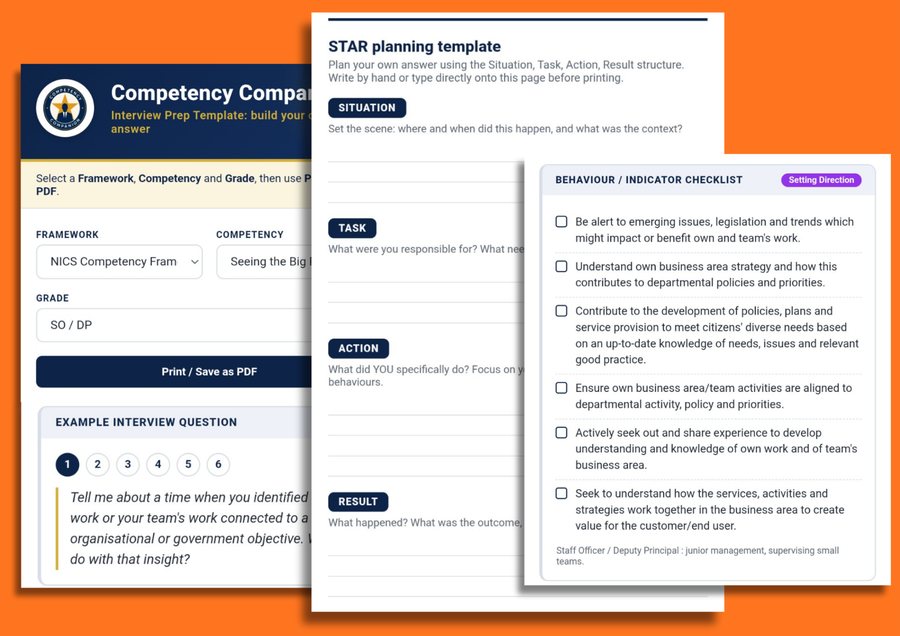
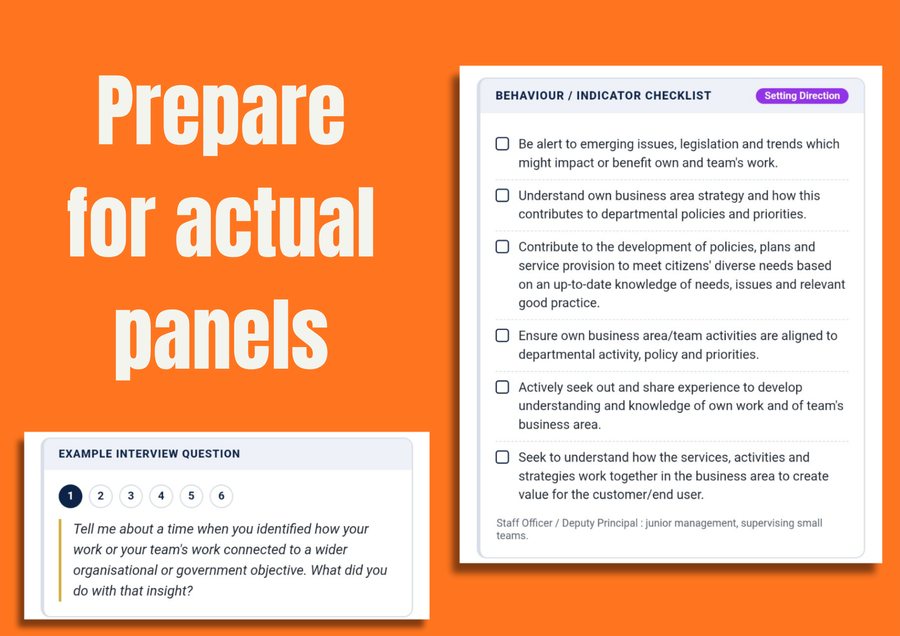
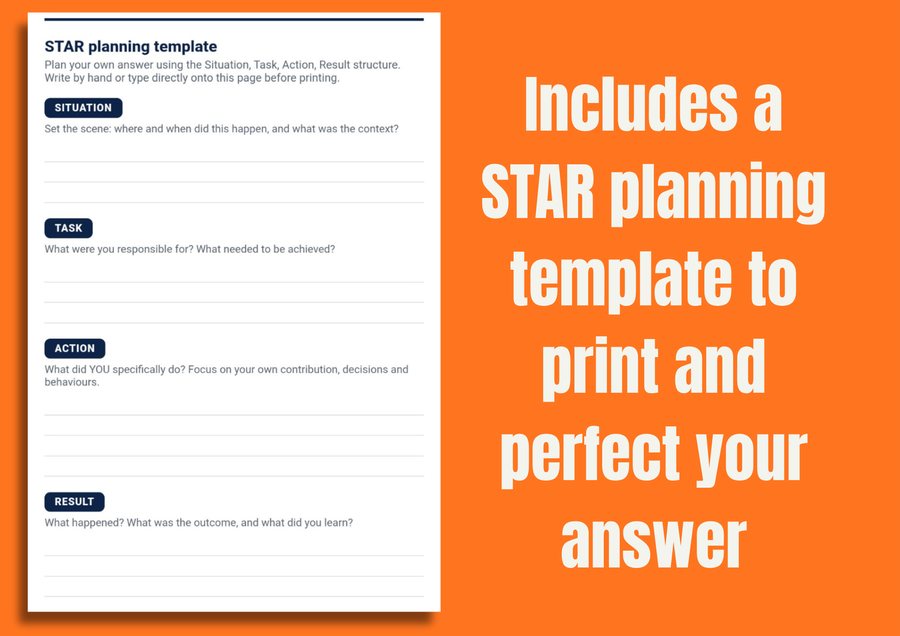
Almost every question you are asked will follow the same underlying pattern, regardless of department or grade: "Tell me about a time when you..." followed by a specific competency or behaviour. You are expected to answer using the STAR structure: Situation, Task, Action, Result. Panels are not interested in hypothetical answers or general opinions; they want a real example with real evidence.
Some interviews ask one question per competency. Increasingly, especially at Grade 7 and above, panels ask broader cluster-based questions where a single answer must demonstrate several competencies at once. If you want the detail on how that format works, see our guide to cluster-based interviews.
Common Interview Questions by Competency
The exact wording varies by framework and department, but the underlying question types below cover the large majority of what candidates are actually asked. For each, we've noted what a strong answer needs to show.
"Tell me about a time you had to make a difficult decision without all the information you would have liked."
A strong answer shows how you gathered what evidence was available, weighed the options and risks, and explains why you chose the course of action you did, not just what you decided.
"Describe a situation where you had to communicate a difficult message to your team or stakeholders."
Assessors are listening for how you adapted your communication to the audience, not just that you delivered the message. Tone, timing, and how you handled reactions all matter.
"Tell me about a time you worked with people outside your immediate team to achieve a shared goal."
The strongest answers show genuine two-way relationship building, not just attending meetings. What did you do to understand the other party's priorities, and how did you find common ground?
"Give an example of when you had to deliver something to a tight deadline."
Panels want to see how you prioritised, managed pressure, and maintained quality under time constraints, not just that you finished on time.
"Tell me about a time you identified a better way of doing something."
A strong answer shows initiative (did you spot the improvement yourself, or were you asked to?) and a measurable before-and-after: what was different once your change was in place.
These five cover most of what appears across NICS and UK Civil Service Success Profiles interviews, though the exact competency names and indicators differ between frameworks. Our NICS Competency Framework guide and UK Success Profiles guide break down the full indicator list for every competency and grade.
A Worked Example Answer
Here is a full STAR-structured answer to the Delivering at Pace question above, at HEO level.
Task: I needed to take on delivery leadership immediately, re-plan the remaining work, and hit the original deadline without compromising quality.
Action: I spent the first day reviewing what had already been completed and identifying the highest-risk remaining tasks. I reprioritised the plan around those risks, reassigned two tasks to team members better suited to them, and set up short daily check-ins to catch slippage early rather than at the end. I also flagged the leadership change to our sponsor immediately, with a revised plan attached, so there were no surprises.
Result: We delivered on the original deadline. The daily check-ins also became a permanent part of how the team runs future time-critical projects, which two colleagues have since adopted for their own work.
Notice what this answer is doing: it spends the majority of its length on Action, it is specific rather than vague ("reassigned two tasks," "daily check-ins," not "I managed the team well"), and the Result includes a lasting outcome beyond the immediate deadline.
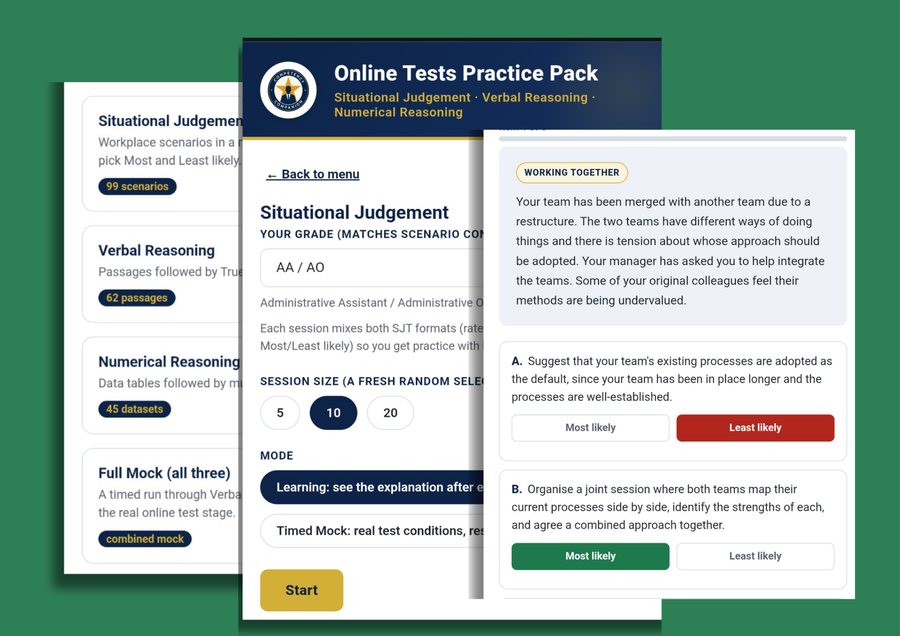
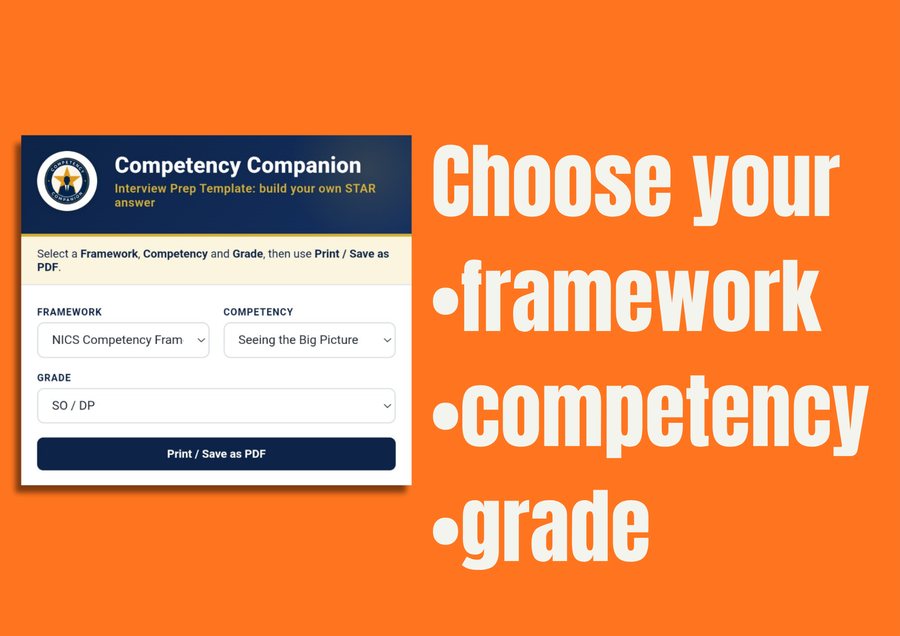
Paste your draft into Competency Companion's Application Checker or Interview Practice module and get instant AI feedback on your STAR balance and indicator coverage, the same thing a panel is scoring against. Free to try, no account needed.
Mistakes That Weaken Otherwise Good Answers
Even strong candidates lose marks for the same handful of avoidable mistakes:
- Speaking in "we" instead of "I." Panels are assessing your individual contribution, not your team's.
- Vague outcomes. "It went well" tells an assessor nothing. Quantify the result wherever you can.
- Spending too long on Situation and Task. These should set up the story quickly; the Action is what gets marked.
- Choosing an example that doesn't actually fit the question. A great story about teamwork does not evidence Making Effective Decisions just because you want to reuse it.
For a fuller breakdown of what causes strong examples to fail, see our 5 Red Flags guide.
How to Prepare for Every Likely Question
You do not need ten completely different stories. Most candidates prepare more effectively with three or four rich, adaptable examples that each cover several competencies, rather than a rigid one-story-per-question approach. Identify your strongest real achievements, work out which competencies each one naturally demonstrates, and strengthen the gaps deliberately before interview day.
If your interview is close, our 48-hour preparation plan covers how to prioritise when time is short.
Frequently Asked Questions
What questions will I be asked in a Civil Service interview?
You will be asked competency or behaviour-based questions tied to the framework for your role, such as NICS or UK Civil Service Success Profiles. Each question asks you to describe a real situation where you demonstrated a specific competency, answered using the STAR structure.
How many questions are asked in a Civil Service interview?
This varies by grade and department, but three to six questions is typical, either one per competency or a broader cluster-based question covering several competencies at once.
Do I need a different example for every interview question?
Not necessarily. A single rich, well-chosen example can evidence more than one competency if it's structured to do so. What matters is that each competency being assessed has enough specific evidence, not that every question gets an entirely new story.
What is the difference between NICS and UK Civil Service interview questions?
The format is similar; both are competency or behaviour-based and expect a STAR-structured answer. The difference is the underlying framework and its specific indicators, which is what assessors actually mark against.
How long should my answer be?
Roughly two to three minutes spoken aloud. Keep Situation and Task brief, spend most of your answer on Action, and finish with a clear, evidenced Result.