His Majesty's Prison and Probation Service, HMPPS, is part of the Ministry of Justice and runs prisons across England and Wales. Prison officer recruitment is one of the more distinctive processes in the Civil Service: it includes online scenario-based testing, a values-based interview, sometimes a role-play exercise with a professional actor, and a dedicated medical and fitness stage that most Civil Service roles simply don't have.
Stage 1: Online Scenario-Based Test
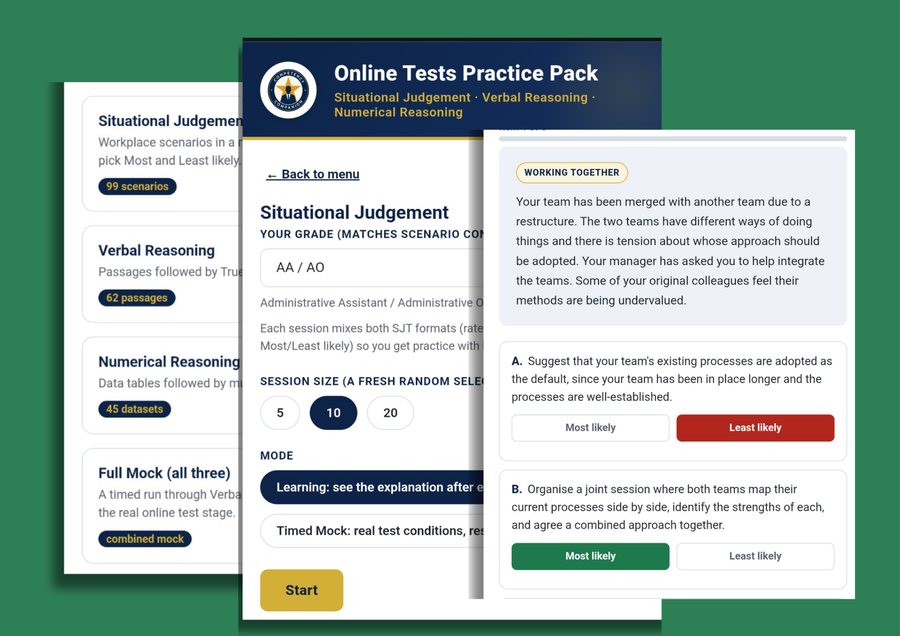
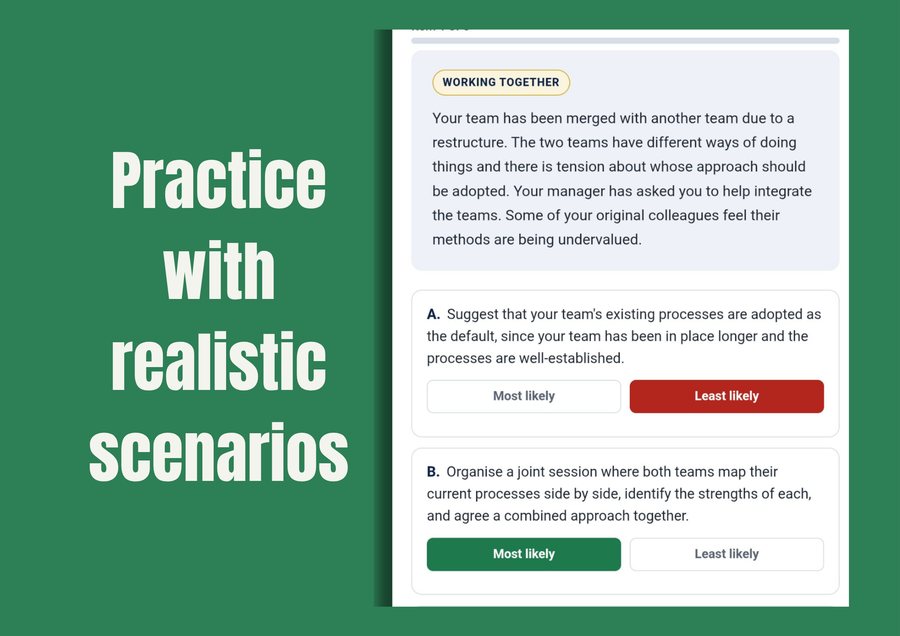
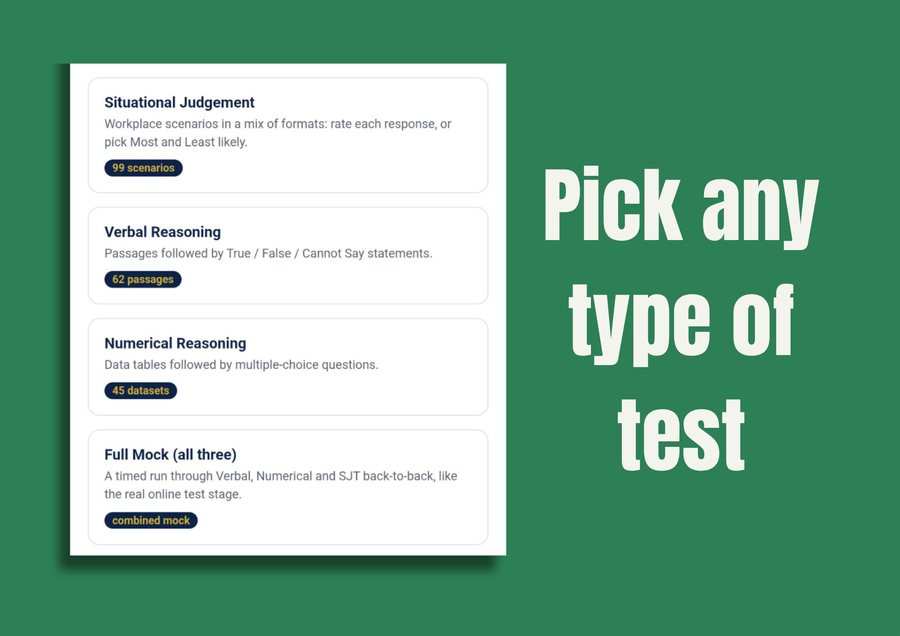
Published HMPPS guidance describes an initial online Scenario-Based Test combining a situational judgement test, choosing the most and least effective response to workplace scenarios, with a numerical test, both completed with no application fee. This is designed to check basic numeracy alongside the judgement and behaviours expected of a prison officer.
Stage 2: Values-Based Assessment
Candidates who pass the scenario-based stage move to a Values-Based Assessment, a varied-format online assessment exploring how well your own values align with HMPPS's values. This reflects the emphasis the service places on character and approach, not just competence.
Stage 3: The Online Assessment Centre
The assessment centre stage typically includes a values-based interview of around 4 to 6 structured questions mapped to HMPPS values, and in some formats a role-play exercise where you interact with a professional actor playing a prisoner in a simulated scenario, and a written exercise. This tests how you handle a live, unscripted interpersonal situation, which is a different skill to describing one after the fact.
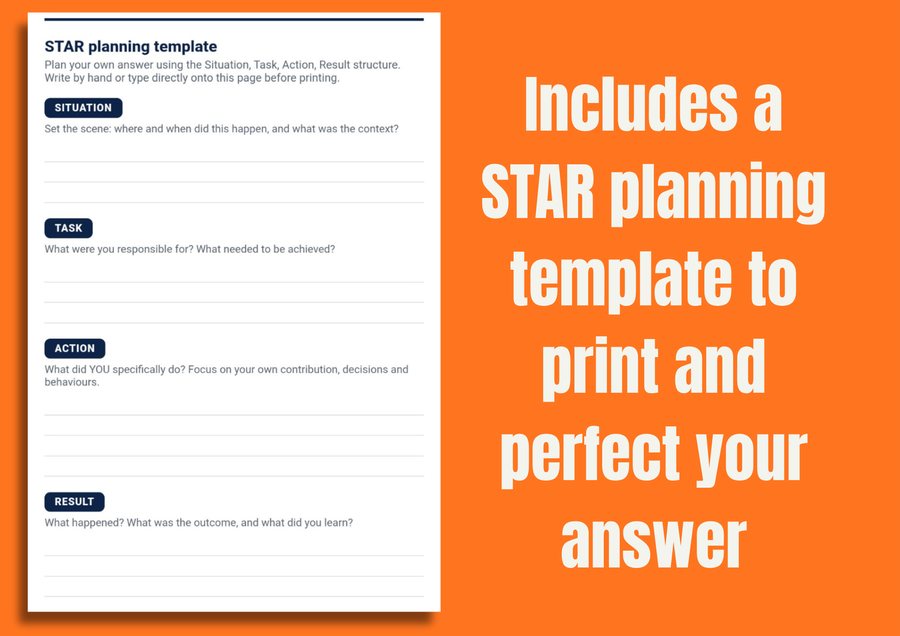
This is a good example of the kind of multi-exercise assessment day covered more generally in our assessment centre guide. For the values-based interview component specifically, the same STAR preparation used across the Civil Service applies; see our interview questions and answers guide for the structure.
You can't script a role-play in advance since the scenario is specific to the day, but you can prepare your approach: staying calm under provocation, setting a firm and fair boundary, and treating the other person with respect even when the conversation is difficult. Modern prison officer work is fundamentally about relationships, not enforcement, and assessors are looking for that balance.
Stage 4: Medical and Fitness Assessment
Candidates who pass the assessment centre attend a medical and fitness assessment with an occupational health professional, covering general health indicators such as blood pressure, eyesight, hearing and BMI, alongside a physical fitness component. This exists because the role has genuine physical demands that most Civil Service roles don't, and it's assessed separately from the values and judgement stages above.
Vetting and Training
Vetting checks, including a Disclosure and Barring Service check, a Counter Terrorism Check, and identity and employment history checks, typically take several weeks to complete. Successful candidates then complete Prison Officer Entry Level Training, a residential training programme covering security procedures, control and restraint, first aid, and communication skills, before being posted to a prison for a period of consolidation.
Frequently Asked Questions
What is the HMPPS prison officer recruitment process?
Published guidance describes an online Scenario-Based Test, a Values-Based Assessment, then an online assessment centre with a values-based interview and often a role-play exercise, followed by medical and fitness assessment and vetting. This can vary between campaigns, so check your own invitation.
Does prison officer recruitment apply in Northern Ireland?
No. HMPPS covers England and Wales only. Northern Ireland has its own separate Prison Service under the Department of Justice in Northern Ireland, with its own distinct process.
What happens in the prison officer role-play exercise?
Some assessment centres include a simulated scenario with a professional actor playing a prisoner, testing how you handle a live interpersonal situation rather than describing one afterwards.
What does the medical and fitness test involve?
General health checks such as blood pressure, eyesight, hearing and BMI, alongside a physical fitness component, to confirm you can safely carry out the physical demands of the role.