The Ministry of Justice is responsible for criminal justice, civil courts, tribunals, family law hearings, probation, legal aid and the regulation of legal services, employing over 70,000 staff in roles from policy development and judicial support to frontline probation work. If you're applying for a prison officer role specifically, HMPPS runs its own distinct process, covered in our dedicated Prison Officer guide. This guide covers everything else: courts, tribunals, probation and the wide range of corporate and operational roles across MOJ.
MOJ Uses Success Profiles
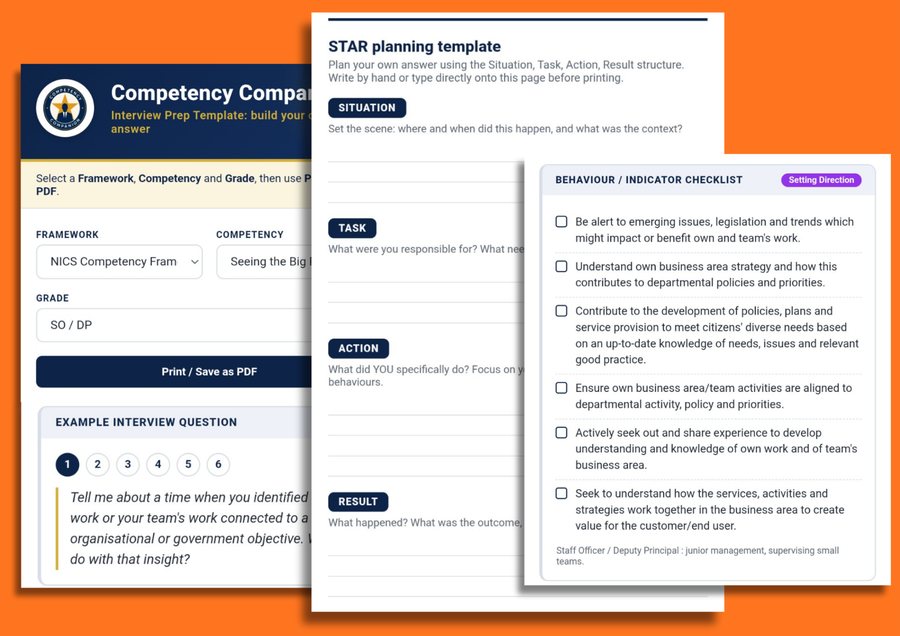
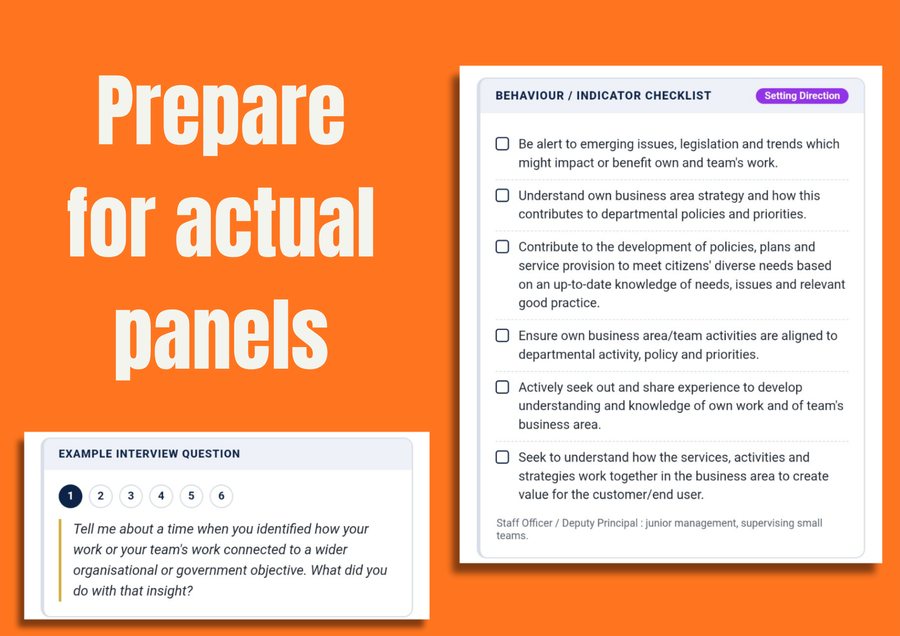
MOJ's own recruitment guidance confirms it uses the Civil Service Success Profile Framework to assess candidates at both application and interview stage, covering a combination of experience, ability, strengths, behaviours and technical or professional skills depending on the role. This is the standard framework used across most of the Civil Service, so the same STAR-based preparation applies.
Courts and Tribunals (HMCTS)
His Majesty's Courts and Tribunals Service, an agency of MOJ, runs the administration of courts and tribunals across England and Wales, from court administration and case progression roles to legal advisors and judicial support. These roles tend to place weight on accuracy, managing competing deadlines, and communicating clearly with people who may be under significant stress, given the nature of court proceedings.
Probation
Probation practitioners supervise offenders in the community and support rehabilitation, working closely with courts, prisons and other agencies. Some specialist probation roles, such as those supporting national security cases, may ask for a presentation as part of the interview process alongside the standard Success Profiles assessment. Given the nature of the work, strong examples often need to show sound judgement under pressure and the ability to build a working relationship with people in difficult circumstances, while still holding a clear professional boundary.
Working Arrangements
Many MOJ roles offer hybrid working where business need allows, typically requiring a minimum proportion of time, often around 60%, based in an office such as a headquarters building, a Justice Collaboration Centre or a Justice Satellite Office. Nationally advertised roles are usually appointed to the office nearest the successful candidate's home postcode. Not every role is suitable for hybrid working, and arrangements are agreed individually.
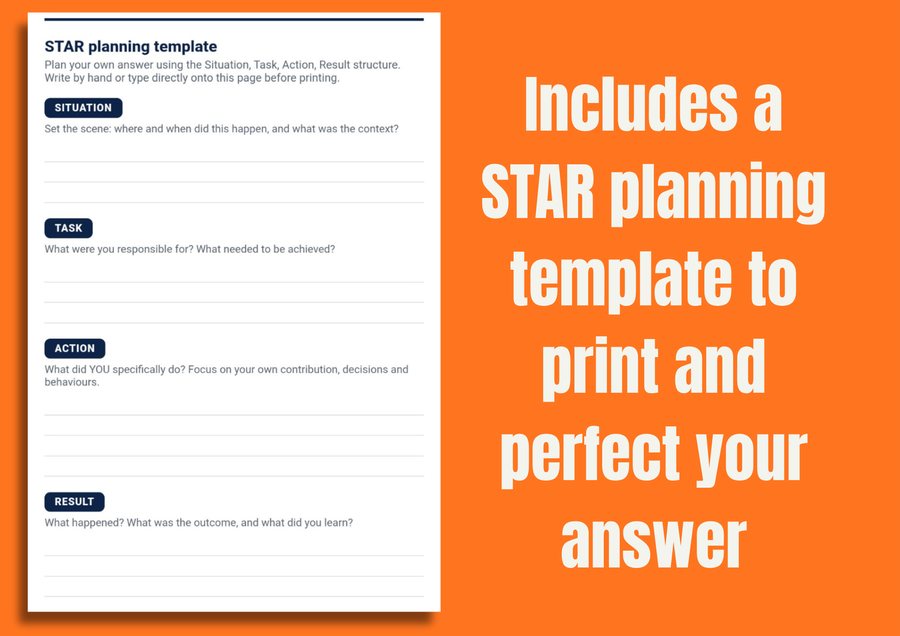
Some MOJ roles, including certain probation and specialist posts, ask candidates to prepare a short presentation for interview. Structure it the same way you'd structure a strong STAR answer: clear context, what you specifically did or would do, and a concrete outcome or recommendation, rather than a broad overview of the topic.
Preparing Your Application
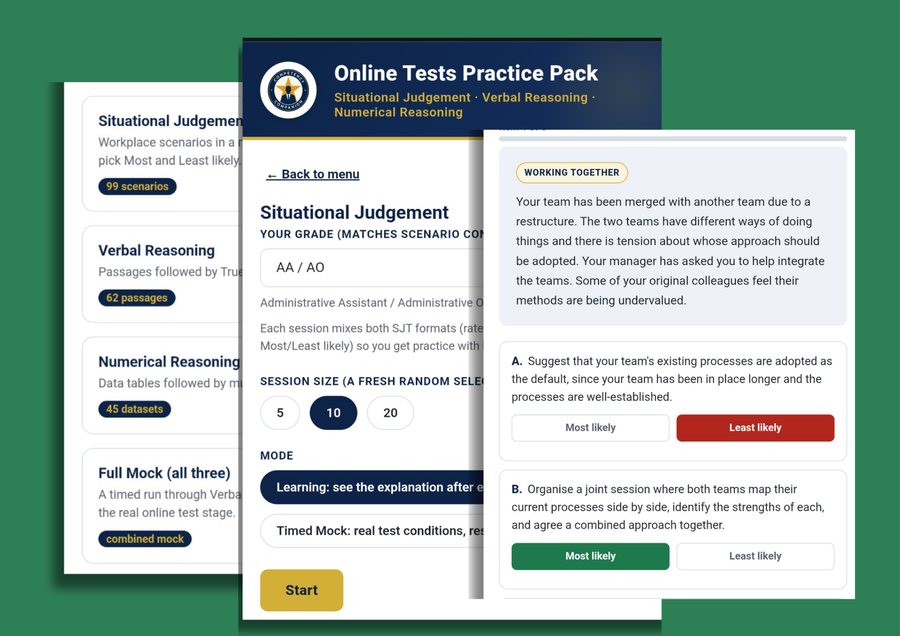
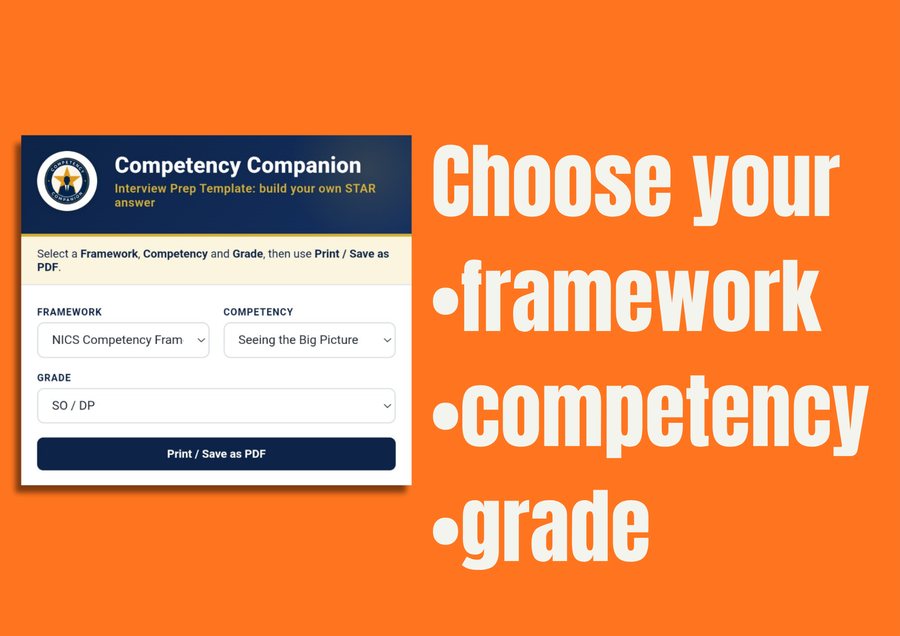
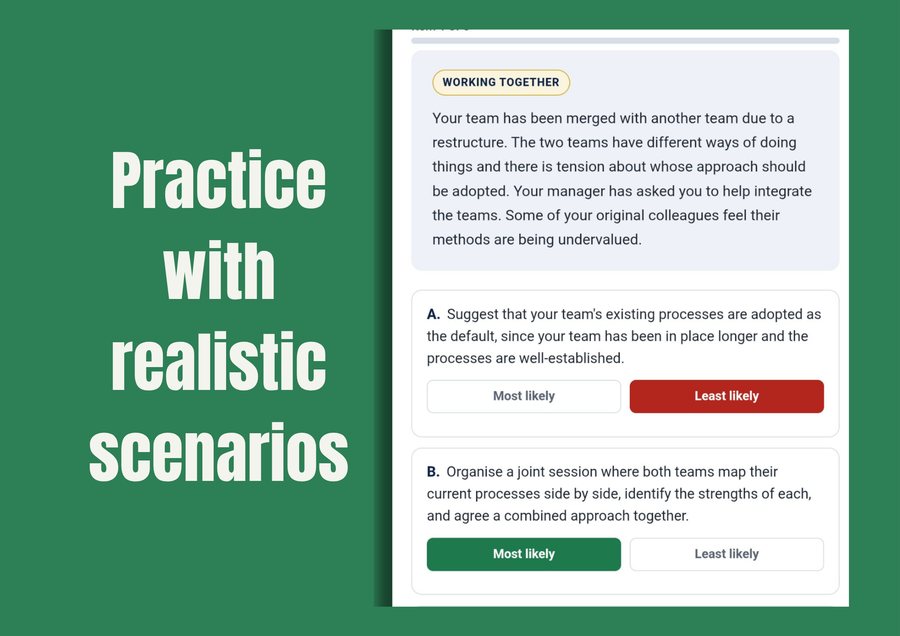
Since MOJ uses standard Success Profiles behaviours, our interview questions and answers guide and STAR method guide cover the preparation that applies directly. If your role includes an assessment centre element, our assessment centre guide covers the exercise types you might face more generally.
Frequently Asked Questions
Does MOJ use Success Profiles?
Yes, at both application and interview stage, covering a combination of experience, ability, strengths, behaviours and technical or professional skills depending on the role.
What roles does MOJ recruit for besides prison officers?
Criminal justice, courts, tribunals, family law hearings, probation, legal aid and legal services regulation, with roles ranging from policy and judicial support to probation practitioners, court administration and digital services.
Is prison officer recruitment different from other MOJ roles?
Yes. HMPPS prison officer recruitment follows its own distinct process, different from the standard Success Profiles route most other MOJ roles follow.
Does MOJ offer hybrid working?
Many roles do where business need allows, typically requiring a minimum proportion of office time. Arrangements vary by role and are agreed individually.