Civil Service recruitment comes with its own vocabulary, and a lot of the confusion candidates run into is really just not knowing what a term means. This page collects the terms and questions that come up most often in one place, with plain-English definitions and links through to a fuller guide wherever one exists on this site.
Glossary
Competency / Behaviour
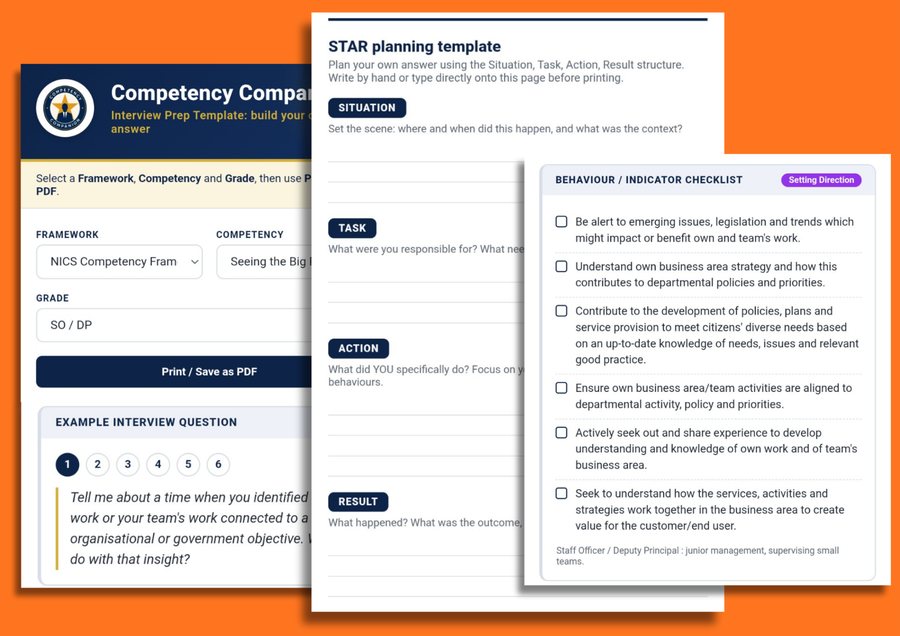
A specific quality or action the Civil Service assesses candidates against, such as "Making Effective Decisions" or "Communicating and Influencing." NICS calls these competencies; UK Success Profiles calls them behaviours. Either way, you're expected to provide real evidence that you've demonstrated it.
Indicator
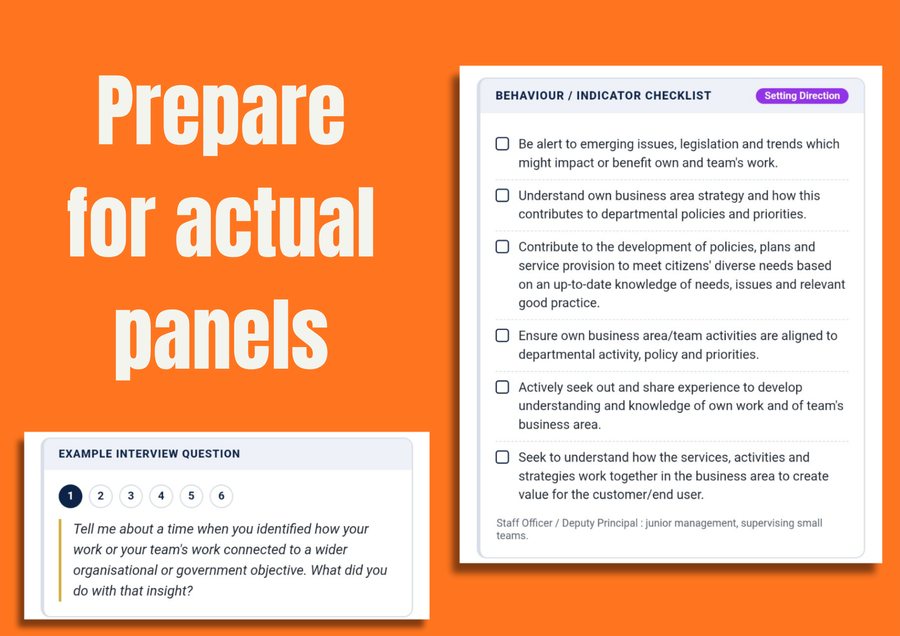
The specific, published marking criteria within a competency or behaviour that assessors actually score against. A strong example needs to evidence the indicators, not just loosely relate to the general topic.
STAR
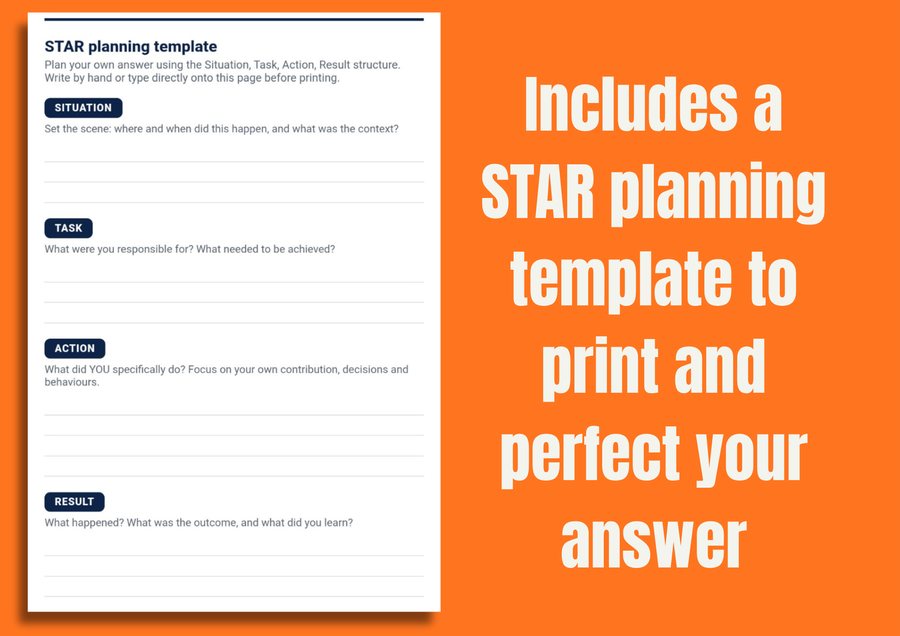
Situation, Task, Action, Result: the structure used to answer competency and behaviour-based questions, in writing or at interview. See our
STAR method guide for the full breakdown.
Sift
The stage where written applications are assessed against the published indicators to decide who progresses to interview or further assessment. See how scoring actually works in our
competency scoring guide.
Panel
The group of assessors, usually two or three people, who conduct your interview and score your answers against the published indicators.
Cluster / Cluster-Based Interview
A format where a single interview question is designed to assess several competencies at once, rather than one question per competency. See our
cluster-based interview guide.
Success Profiles
The current UK Civil Service assessment framework, using five possible elements: Behaviours, Strengths, Ability, Experience and Technical. See our
UK Success Profiles guide.
Strengths
A Success Profiles element assessing what you naturally do well and find motivating, rather than a rehearsed example. Designed to get a genuine reaction rather than a prepared answer.
NICS Competency Framework
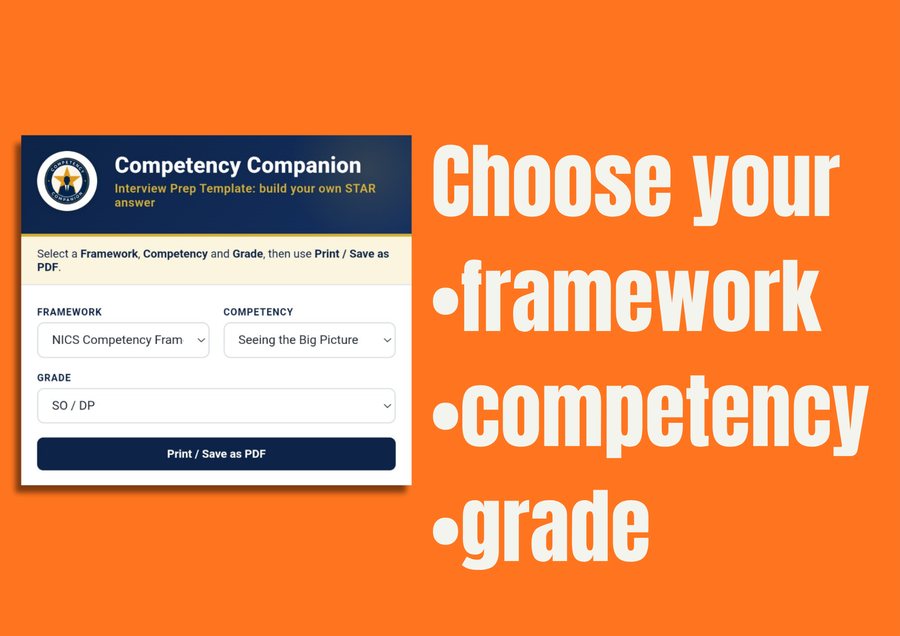
The framework used by the Northern Ireland Civil Service, assessing candidates across competencies grouped into clusters. See our
NICS Competency Framework guide.
Grade
Your seniority level, from AA/AO up to the Senior Civil Service, which determines the depth and scope of evidence expected in your examples. See our
grades explained guide.
Assessment Centre
A stage combining several exercises, such as written tasks, group exercises or presentations, in one session. Not every process includes one. See our
assessment centre guide.
Merit List / Reserve List
Candidates who pass a competition are ranked in merit order. Those not immediately offered a role may be held on a reserve list, sometimes for up to 12 months, and offered a post later if a vacancy arises.
Recruitment Principles
The legal requirement, set out by the independent Civil Service Commission, that selection for Civil Service appointment must be on merit, through fair and open competition. Departments must follow these rules when running a competition.
Name-Blind (Anonymised) Recruitment
A practice, used by many departments, of hiding personal identifying details from assessors during sifting, intended to reduce unconscious bias. Practice varies by department and competition.
Fast Stream
The Civil Service's flagship graduate leadership development scheme, with department-specific variants such as the Diplomatic and Development Fast Stream at FCDO.
Security Vetting (BPSS, CTC, SC, DV)
Background checks required for roles with access to sensitive information, ranging from Baseline Personnel Security Standard (BPSS), the standard check for most roles, up to Counter Terrorist Check (CTC), Security Check (SC) and Developed Vetting (DV) for higher-sensitivity posts, common in departments like MOD and the security-facing parts of Home Office.
Frequently Asked Questions
How long does Civil Service recruitment take?
It varies considerably by role, grade and department. A straightforward junior role might take a few weeks from application to offer, while senior roles or those requiring higher security vetting can take several months. Check the competition details for any published timescales.
Can I apply for more than one Civil Service job at once?
Generally yes; there's no blanket rule against applying to multiple competitions simultaneously, though some specific schemes may have their own eligibility windows. Check the terms of each individual competition.
Can I appeal my Civil Service application result?
There's no formal right of appeal against a selection decision itself. If you believe a competition breached the Civil Service Commission's Recruitment Principles, you can raise a complaint with the relevant department, and with the Commission if unresolved.
Is Civil Service recruitment anonymised?
Many departments use name-blind sifting as part of their commitment to fair recruitment, but practice can vary by department and competition, so this isn't universally guaranteed.
What happens if I'm unsuccessful in a Civil Service competition?
You're generally free to reapply to future competitions. Some competitions offer feedback on request, though this isn't guaranteed everywhere, so check what's offered for your specific competition.