You've crafted the perfect STAR example. It's detailed, it's compelling, it demonstrates every indicator. There's just one problem: it's 387 words long, and the application form says 250 words maximum.
Welcome to the most frustrating part of Civil Service applications. Word limits vary: 250 is common for behaviour statements, but you might see 500 for some roles, 300 for others, or even 150 for NICS Deputy Principal applications. Whatever the limit, the challenge is the same: how do you cut 30-40% of your example without losing its impact?
Why Word Limits Are So Brutal
A 250-word behaviour statement is approximately one paragraph. That's all you get to demonstrate that you meet a competency that took years to develop.
Most candidates approach this wrong. They write their example naturally (usually 350-400 words), then randomly delete sentences until they hit the limit. This creates a choppy, incomplete narrative that confuses the panel.
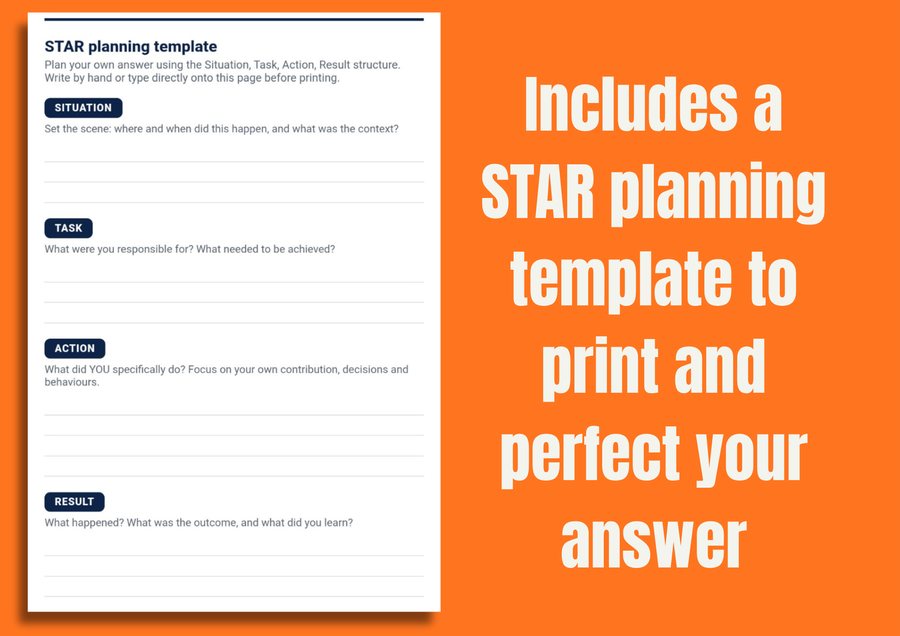
The solution? Write strategically for the word limit from the start, following the 60/20/10/10 rule.
The 60/20/10/10 Rule
For a 250-word example, your breakdown should be:
- Situation: 25 words (10%): One or two sentences of context
- Task: 25 words (10%): What you needed to achieve
- Action: 150 words (60%): What YOU specifically did
- Result: 50 words (20%): The outcome with evidence
Most word processors show a live word count. Check it after writing each STAR section. If your Situation is already 80 words, you know you've gone wrong before wasting time on the rest.
What to Ruthlessly Cut
1. Background Detail Nobody Needs
Cut this: "In 2019, following the departmental restructure announced in March, our team was merged with the Finance Operations unit, which had previously reported to a different Director. This created complexity because..."
Keep this: "During a team restructure..."
The panel doesn't need the org chart history. One sentence is enough.
2. Meeting Lists and Attendees
Cut this: "I organised meetings with the Head of Policy, the Senior Responsible Owner, representatives from HR, Finance, and IT, as well as the project sponsor and two Grade 6 stakeholders."
Keep this: "I convened senior stakeholders across five directorates."
Who cares who attended? What matters is that you brought the right people together.
3. Process Steps Without Purpose
Cut this: "First, I reviewed the existing documentation. Then, I created a project plan. Next, I scheduled fortnightly check-ins. After that, I drafted a risk register."
Keep this: "I established governance structures and proactive risk management to ensure delivery."
Don't list activities. Explain why you did them and what they achieved.
4. Acronyms and Jargon (Unless Universal)
Cut this: "I used the EDRM framework to align our KPIs with the SRO's strategic priorities, ensuring BAU activities supported the DDP objectives."
Keep this: "I aligned team priorities with strategic objectives, ensuring daily work supported departmental goals."
The panel might not know your internal acronyms. Plain English always wins.
5. Emotional Cushioning
Cut this: "I felt that it would be beneficial to consider whether we might potentially..."
Keep this: "I proposed..."
This is not the place for hedging. Be direct and confident.
What to Keep
1. Your Specific Actions
The word "I" should appear frequently. This is the core of your example: what YOU did. Never sacrifice this section to save space.
If you're tempted to write "We decided to implement a new system," you're wasting words on team actions rather than YOUR actions. Change it to: "I proposed and secured approval for a new system."
2. Quantified Results
Numbers prove impact. Keep them.
- ❌ "Improved efficiency" (vague, forgettable)
- ✅ "Reduced processing time by 18%" (specific, memorable)
3. Decision Rationale (For Grade 7+)
Senior roles need strategic thinking. Keep the "why" behind your actions:
- ❌ "I chose Option A."
- ✅ "I chose Option A over Option B to mitigate reputational risk whilst maintaining stakeholder confidence."
4. Competency Keywords
If the competency is "Managing a Quality Service," your example should include words like "standards," "stakeholder," "continuous improvement," "risk." Don't waste space on synonyms that don't match the framework language.
Before and After: A Real Example
"In my role as Senior Executive Officer in the Policy Development team, I was responsible for leading a cross-cutting project that aimed to improve the way we handled ministerial correspondence. The existing system had been in place since 2018 and was increasingly seen as outdated by colleagues who had to use it on a daily basis. There were frequent complaints about the system being slow and difficult to navigate, which was causing delays in responding to ministerial queries and creating frustration amongst the team.
The task was to design and implement a new system that would be faster, more user-friendly, and would reduce the average response time from 10 days to 5 days, whilst also ensuring that we maintained our quality standards and didn't lose any historical data in the transition process.
I began by conducting a series of consultations with staff at all levels who used the old system. I organised workshops, one-to-one interviews, and sent out surveys to gather feedback. I also researched what other government departments were doing and spoke to colleagues in HMRC and DWP about their systems. Based on this research, I created a business case for a new digital platform. I then presented this business case to the Senior Leadership Team and secured their approval and the necessary budget of £50,000.
Once approved, I led the implementation, working closely with IT specialists and training staff on the new system. I created user guides and ran training sessions every week for three months.
As a result of these changes, the average response time for ministerial correspondence decreased from 10 days to 4 days, exceeding our target. Staff satisfaction scores increased by 35%, and we received positive feedback from the Minister's office about the improved quality and timeliness of responses."
Situation: As Senior Executive Officer, I led a project to replace our outdated ministerial correspondence system, which was causing delays and team frustration.
Task: I needed to reduce response times from 10 to 5 days whilst maintaining quality and preserving historical data.
Action: I conducted staff consultations through workshops and surveys, identifying the key pain points with the existing system. I researched best practice across government, speaking to colleagues in HMRC and DWP about their approaches. Using this evidence, I built a business case demonstrating how a £50,000 investment would deliver efficiency gains and improved stakeholder satisfaction.
I presented the case to Senior Leadership, securing approval and budget. I then led the implementation, working with IT specialists to configure the system and managing the transition plan. I personally created user guides and delivered weekly training sessions over three months, ensuring all staff were confident with the new platform before full rollout. I established a feedback loop to identify and resolve issues quickly, maintaining service continuity throughout the change.
Result: Average response time fell from 10 days to 4 days, exceeding our target. Staff satisfaction increased by 35%, and we received commendation from the Minister's office for improved response quality and timeliness. The system has since been adopted as best practice by two other directorates.
The Cutting Process: A Step-by-Step Method
Step 1: Write the full version: Don't self-edit yet. Get everything down (this will be 350-400 words).
Step 2: Highlight your actions: Mark every sentence where YOU took an action. This is sacred text.
Step 3: Kill the background: Reduce Situation to one sentence (25 words maximum).
Step 4: Remove process lists: Change "I did X, then Y, then Z" to "I delivered X by doing Y."
Step 5: Count and trim: If still over, remove adjectives and combine sentences.
If you stumble whilst reading your example aloud, it's too complex. Simplify the sentence. The panel will read dozens of examples in one sitting; clarity beats cleverness.
Different Word Limits: How to Adapt
For 150-word limits (NICS DP level)
Use the same 60/20/10/10 split, but be even more brutal:
- Situation: 15 words (2 sentences maximum)
- Task: 15 words (1 sentence)
- Action: 90 words (focus on 2-3 key actions only)
- Result: 30 words (one strong metric)
For 500-word limits (some SCS roles)
Don't just write more. Use the extra space for:
- More detailed decision rationale (why you chose your approach)
- Stakeholder management complexity
- Multiple examples of the same competency
- Longer-term impact and sustainability
For 300-word limits (common for some departments)
This is the "Goldilocks" length: enough room to breathe, but still requiring discipline. Follow 60/20/10/10 but allow slightly more context (40 words for Situation+Task).
Common Mistakes to Avoid
Mistake 1: Cutting the Result section to save space
Result is 20% of your word count. Without it, you haven't demonstrated impact. If you're over the limit, cut background, not outcomes.
Mistake 2: Using tiny font or removing spaces
The panel will notice. Many systems count characters too. Don't try to game the system.
Mistake 3: Writing right up to the limit
Aim for 245 words, not 250. Gives you buffer for last-minute tweaks without going over.
Mistake 4: Recycling examples without adapting them
That 400-word example from your last application? It needs surgery, not copy-paste.
Final Checklist Before Submitting
✓ Is my Situation section under 30 words?
✓ Does my Action section use "I" more than "we"?
✓ Have I included at least one quantified result?
✓ Have I removed all meeting attendee lists?
✓ Is every sentence necessary?
✓ Would a stranger understand this without knowing my department?
✓ Am I within the word limit (with buffer)?